

Better at some things, worse at others, and not better in the way the question usually implies. The health framing in particular needs correcting.
Where Japanese cigarettes are genuinely better
Consistency. Japanese manufacturing tolerance is tight, and carton-to-carton variation is small.
Cleanliness. The charcoal filter and bright-leaf blend produce less harshness and a shorter finish. If you dislike the lingering sweetness of an American blend, this is a real improvement.
Granularity. The milligram ladder lets you choose a strength precisely rather than picking between three broad bands.
Where they are not
Weight. An American blend delivers more body at the same nominal tar. If you want substance, Japanese products can feel thin.
Flavour complexity. The American blend’s cocoa-and-molasses casing is more layered. Japanese products are cleaner and simpler by design.
Availability. Fewer brands, fewer variants, limited export.
The health question, answered directly
No. Japanese cigarettes are not less harmful than American ones. The charcoal filter changes flavour, not risk. The lower tar numbers are partly a ventilation artefact, and ventilation does not reduce what a person actually absorbs.
This is worth stating plainly because “Japanese cigarettes are cleaner” is a common inference and it is wrong. Cleaner-tasting is a sensory description. It has no bearing on risk.
Are they different?
Yes, structurally — different leaf blend, finer cut, charcoal filtration, lower ventilation. Our detailed comparison covers the engineering.
Which should you buy
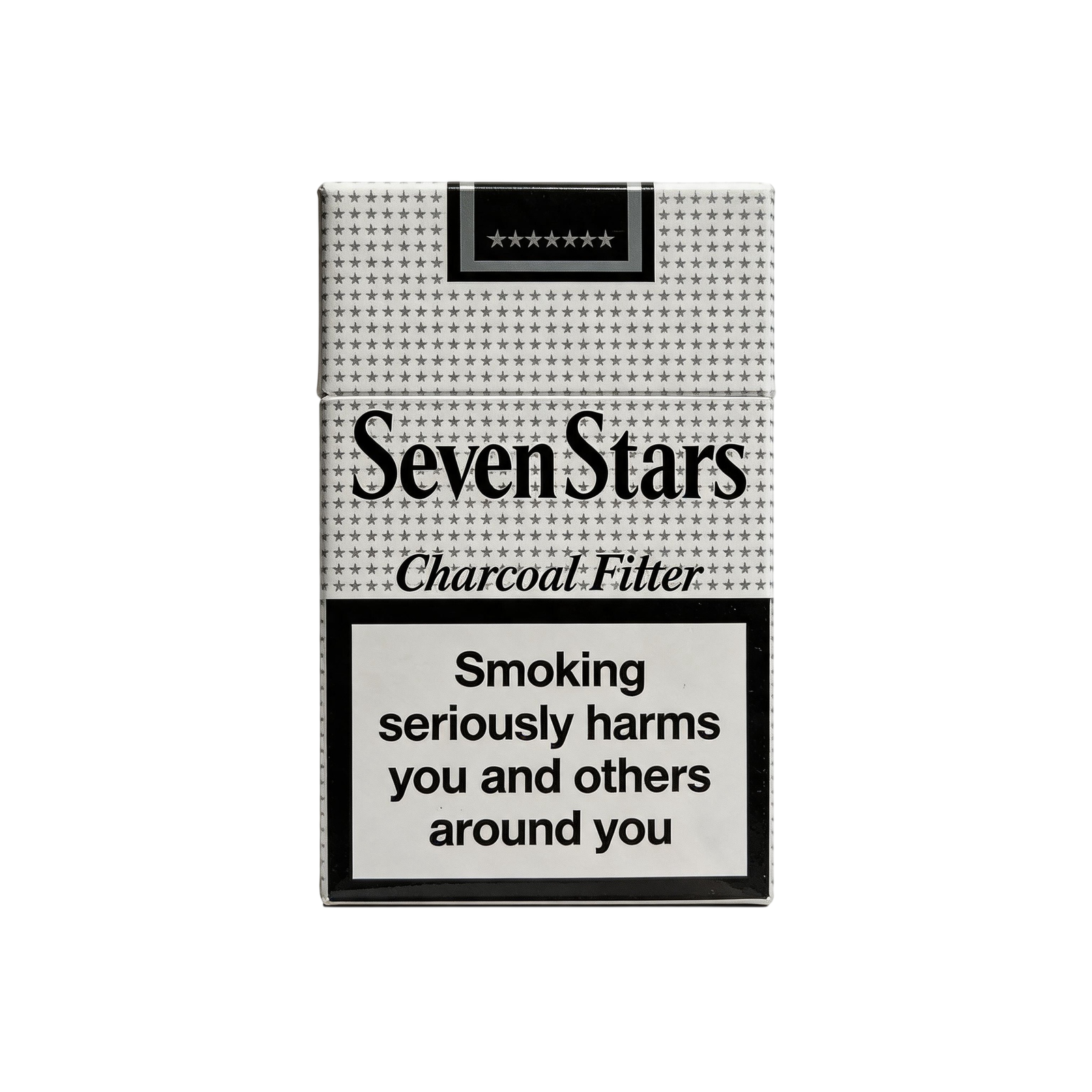
If you smoke lights and want something cleaner: Japanese, and Mevius is the obvious entry. If you smoke full-flavour and want weight: American, or the Japanese full-strength exception, Seven Stars.
Two cartons, one of each, is the cheapest way to settle it. Our Mevius versus Seven Stars comparison covers the Japanese internal split.
Better at what, exactly
The question is usually meant as “is the tobacco better”, and the honest answer is that Japanese cigarettes are better at specific things and not at others. They are better at consistency: the tar and nicotine printed on the pack are measured to a standard and the blend does not vary much between cartons. They are better at filter engineering, particularly the charcoal filters that Japanese brands popularised. They are better at narrow formats, which is a real category rather than a niche.
They are not better at strength in the American sense. A Japanese 14mg full-flavour is a different experience from an American full-flavour, not a stronger version of it. And they are not better at value per cigarette if you are comparing a slim to a king-size.
The charcoal filter claim, examined
Charcoal filters, which is what the “charcoal” in Seven Stars Charcoal refers to, use activated carbon in the filter to adsorb some volatile compounds from the smoke. Whether that produces a meaningful health benefit is not established, and no regulator has approved a health claim on that basis. What it does do is change the taste: charcoal-filtered smoke is generally described as drier and less sharp. If you like that, the filter is a feature. If you do not, it is a gimmick.
Do not buy a Japanese cigarette because you believe the charcoal makes it safer. Buy it because you prefer how it smokes.
Consistency is the real difference
The strongest argument for Japanese brands is manufacturing discipline. Batches are small relative to American mass-market production, the leaf blend is tightly specified, and the packs carry tar and nicotine figures that are measured rather than marketing estimates. If you have ever had a carton of an American brand that tasted noticeably different from the last one, that variability is what Japanese premium pricing is partly buying you out of.
Whether that is worth $79 a carton is a personal judgement. It is a real difference, not an invented one.
What they are not good at
Availability and price stability. Japanese brands are exported in limited quantities, and the online supply fluctuates. A carton that costs $79 this month may be unavailable next month, and the substitute may be a different brand entirely. If you need a cigarette you can buy reliably at the same price for years, an American brand is the safer choice.
They are also not good at delivering an American-style full-flavour hit. If that is what you want, no Japanese brand will satisfy it, and you will spend a lot of money finding that out.
Which one to try
If you want the reference Japanese full-flavour, Seven Stars Charcoal 14mg. If you want a lighter everyday smoke, Mevius Sky Blue 7mg. If you want the menthol capsule experience, Mevius E-Series Menthol 5mg. All three are $79.00 a carton, which makes the comparison unusually clean: same price, three different answers to “what should a cigarette taste like”. Our Mevius versus Seven Stars piece goes deeper on the first two.