

Korea is unusual for having a largely uniform national price. A pack of a mainstream brand costs roughly the same in Seoul as in a provincial city, because tobacco tax is national and there is no state-level layer to create a patchwork.
Why the price is flat
No subnational tobacco tax, and no local licensing variation on price. That removes the cross-border shopping dynamic that dominates American cigarette economics, where a carton can differ by 60% between neighbouring states.
Pack and carton
Twenty per pack, ten packs per carton — the standard 200-cigarette unit. Retail does not discount cartons much, because the margin is thin and the price is effectively fixed.
In dollar terms, Korean packs sit in the mid-single digits, so a carton is well below a US mid-range carton. That is a genuine price difference driven by a lower tax burden.
What it costs outside Korea
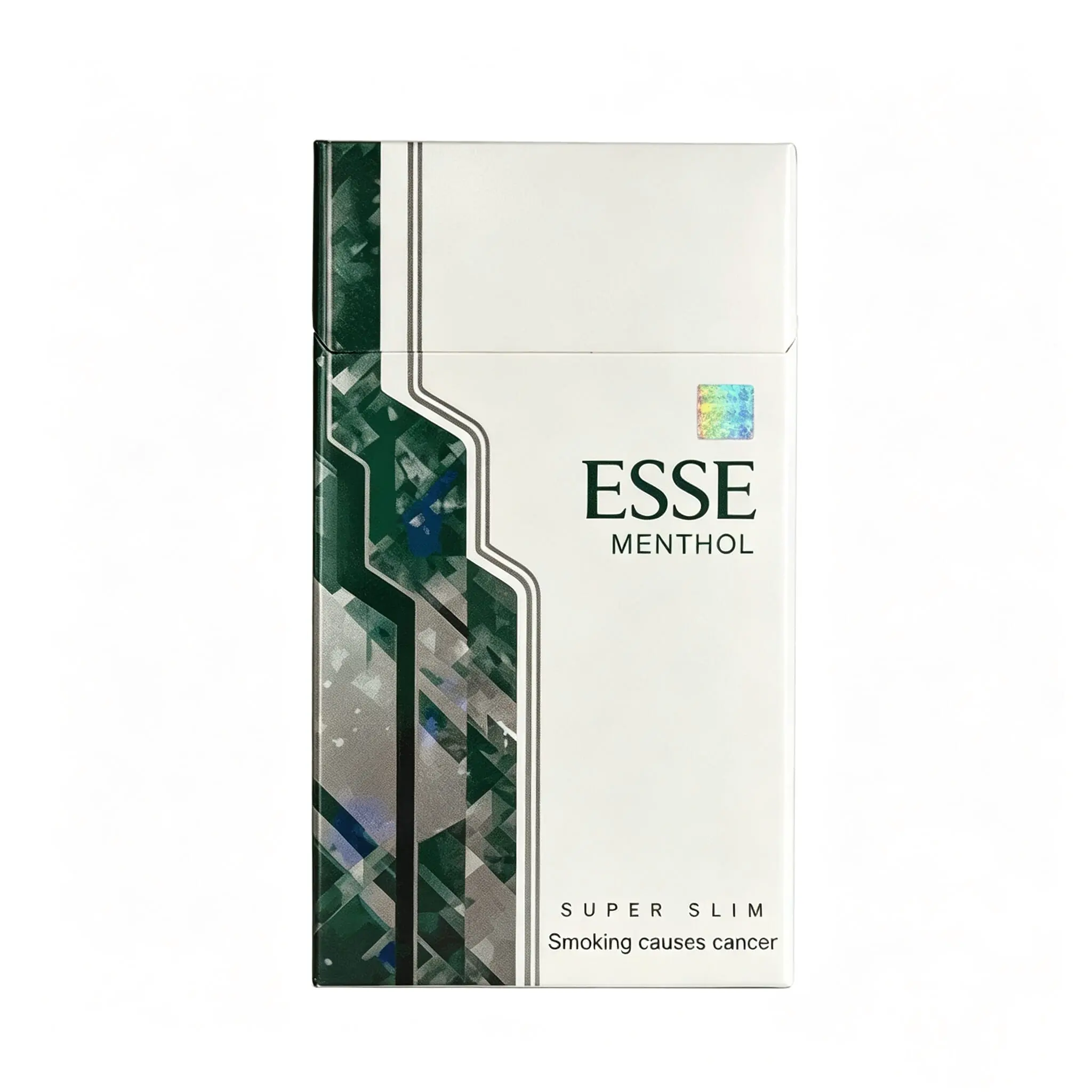
Import cost erodes the advantage. Our ESSE Super Slim carton at $59.90 is the cheapest we sell, but it is not dramatically below a domestic mid-range carton — because export and margin costs are added.
Why Korea is a slim market
Super-slims are mainstream there, not niche. That shapes the price perception too: a slim pack contains less tobacco, which is cheaper to produce, and the format became the norm rather than a premium variant.
Our note on the slim format explains why.
If you are travelling
Korea’s duty-free prices are not dramatically below domestic retail, precisely because domestic retail is already low. The saving from buying cigarettes in Korea is smaller than from buying them in most of Europe.
Personal allowances apply on import — check the destination country’s limit, not the origin’s. Our duty-free note covers the mechanism.
How Korean shelf prices are set
Korea taxes cigarettes with a specific duty per pack rather than a percentage of the retail price, and the manufacturer’s share is small. That is why a value brand and a premium brand land within a few hundred won of each other on the same shelf. The tax, not the brand, sets the price, and the brand competes on format and taste instead.
It is worth understanding because it explains something that confuses foreign buyers: there is no cheap Korean brand and no expensive one. There is only Korean price, which is low by American standards, applied evenly.
What that means per cigarette
A Korean pack is twenty cigarettes, and most Korean brands are slims rather than standard kings. A slim contains less tobacco, so the low pack price is partly buying less leaf. Per cigarette the price looks excellent; per gram of tobacco the advantage is smaller than it appears. That distinction matters if you are comparing a Korean slim to an American king-size on price alone.
Korea is also a capsule-heavy market. Many packs offer a crush bead, and the bead is a feature of the format rather than a premium tier, so it does not add to the price the way a capsule sometimes does elsewhere.
The gap between shelf price and delivered price
Once a Korean carton is exported, three costs attach: freight, handling, and seller margin. The result is a delivered carton in the $55 to $65 band for a value slim, which is still well below American premium pricing but no longer the bargain the Korean shelf price implies. That gap is not profiteering; it is the real cost of moving a low-value, bulky product across an ocean.
This is also why the flat Korean pricing does not survive export. Outside Korea, each seller sets their own number, and the same carton can be quoted at very different prices. Compare per pack, not per carton.
Should you stock up in Korea
No. The price is the same in every convenience store, the product is not scarce, and carrying cartons home runs into allowance rules that can cost more than the saving. Buy what you will smoke on the trip and leave the rest. Our duty-free piece explains where the allowances bite.
If you want Korean stock regularly, buying cartons online is the practical route, and the value case rests on the format rather than a dramatic discount.
Where Korean stock fits
It is the value and format end of the market: narrow cigarettes, capsule options, low price, mild body. It is not a substitute for a full-flavour American cigarette or a Japanese premium, and buying it expecting either will disappoint. Our Japan versus Korea comparison sets the two apart properly.