

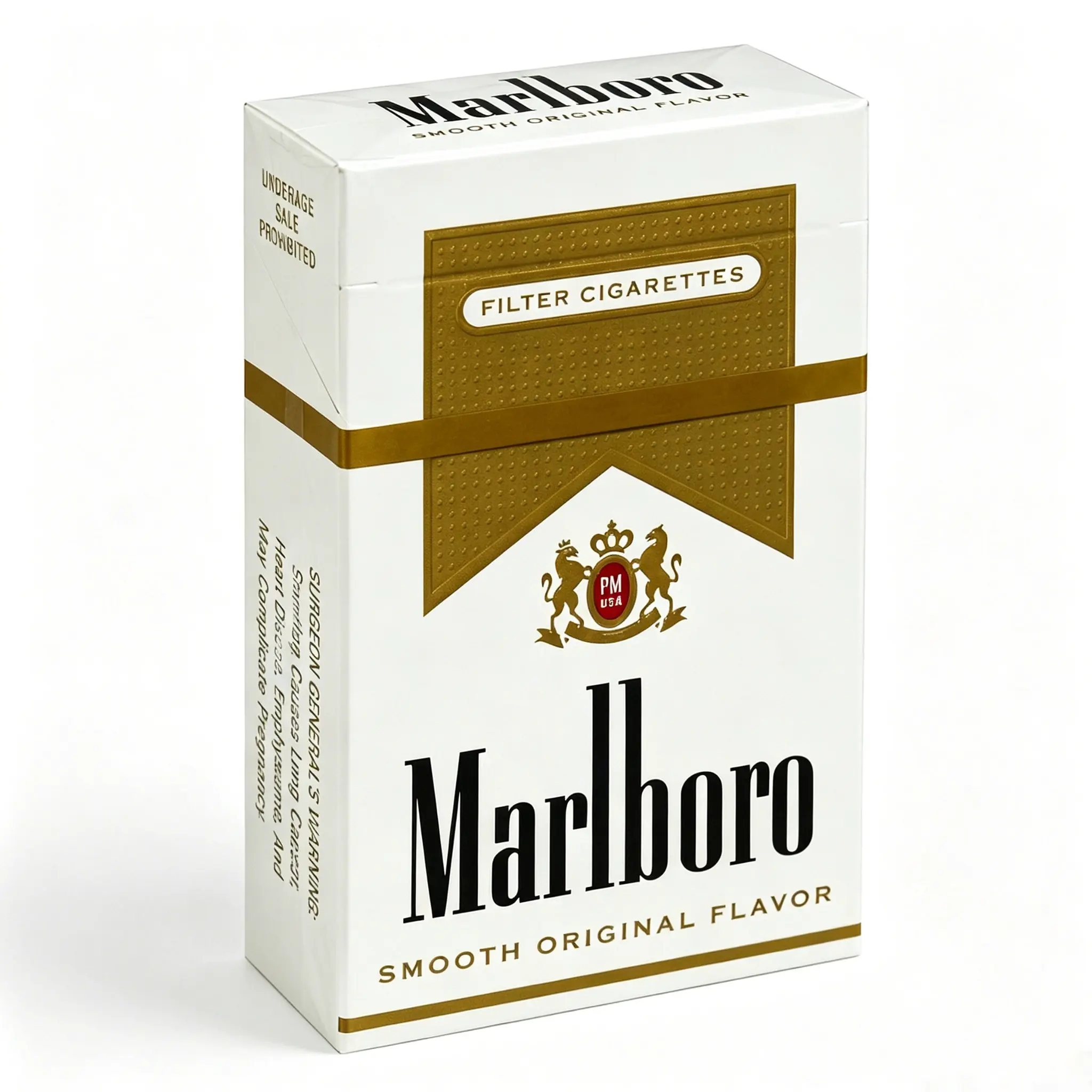
Two packs, same brand, same cigarettes, different box. The soft pack is the older format — a paper sleeve with foil inside, folding at the top. The hard pack, or box, is a rigid cardboard shell with a hinged lid. The difference looks cosmetic and is not entirely.
Protection
A box pack protects the cigarettes. Drop it, sit on it, carry it in a bag with keys, and the cigarettes inside are still straight. A soft pack deforms, and a deformed cigarette draws unevenly because the rod has been bent.
This is the main reason box packs took over the US market. They survive pockets and purses, and the difference in cost per pack is a few cents.
Freshness
Soft packs actually have a slight edge here, counterintuitively. The foil-lined paper wraps tighter and the fold-over top creates a decent seal each time you close it. A box pack’s hinged lid does not seal — it just covers — so an open box pack exchanges air with the room more freely.
In a dry climate that means a box pack dries faster. In a humid one it means it picks up moisture faster. Either way, if you smoke a pack over more than a few days, the soft pack holds its condition better.
The cigarette itself can differ
This is the part most people miss. In some brands, the soft pack and box pack versions are not identical products. The blend can be adjusted — usually slightly — because the two formats are positioned differently, and the paper or filter spec sometimes differs too.
Marlboro is the classic example: the soft pack and box versions have historically been treated as separate SKUs with their own following, not just two packagings of one product. If you are switching formats within a brand, expect a small difference and do not assume you bought the same thing.
Which crushes in a carton
Soft packs are more vulnerable in transit. A carton of soft packs that has been compressed will show it: the packs bow, and the cigarettes near the ends bend. Box packs travel better, which is one reason cartons of boxes are the more common export format.
If you are ordering by mail, box packs are the safer choice purely on the basis of arriving straight.
Opening and re-closing
A soft pack is opened by peeling the top label and lifting the foil. Getting it closed again is a fold, not a seal, and after a few days the top frays. A box pack opens once and closes with a lid that stays shut.
For anyone who smokes four or five cigarettes a day and carries a pack around, the box is simply more practical. For anyone who smokes a pack in a day, the difference is negligible.
Availability in the US
Box packs dominate. Soft packs survive mainly in full-flavour brands and in older product lines, and they are increasingly hard to find outside specialty channels. All of the cartons we stock are box format — Marlboro Red, Marlboro Gold, Newport Menthol and the rest.
That is not a limitation so much as a reflection of what the market actually buys. Soft packs are a preference, not a default.
What to choose
If you carry a pack in a pocket or bag, choose the box. If you smoke at home and care about the last cigarette in the pack tasting like the first, the soft pack has a small edge — but only if you can find one, and only if you are buying a brand where the two versions share a blend.