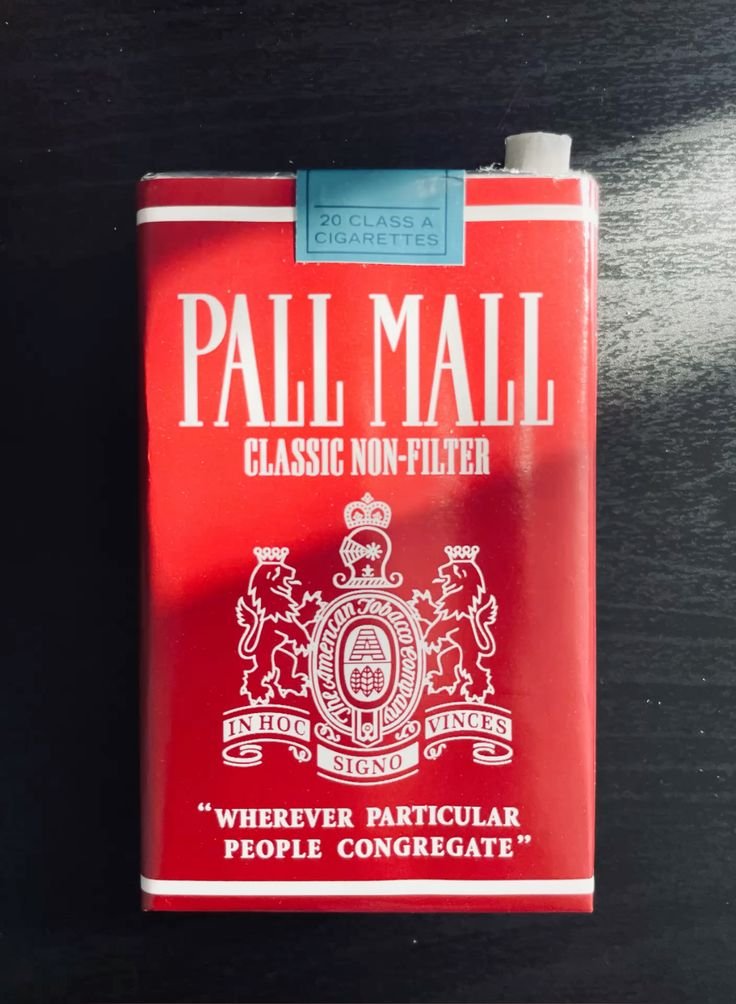

The difference sounds trivial — 85mm versus 100mm — and in a sense it is. But the extra 15 millimetres change the draw, the burn time, and the price, and they change them in ways that are not obvious until you have smoked both for a week.

The measurements
A King Size cigarette is 85mm from tip to filter end. A 100 is 100mm. Both contain the same 20 cigarettes per pack, and both are sold in cartons of ten packs. The 100 is not a bigger pack; it is a longer cigarette in a slightly longer box.
Within the 100mm format there is also “100s box” versus “100s soft pack,” which changes the packaging but not the cigarette.
What the extra length does to the draw
Smoke travelling through a longer rod passes through more tobacco, which filters it slightly more. In practice, a 100 draws a little cooler and a little lighter than the equivalent king in the same blend. People who find a king too sharp often prefer the 100 for exactly this reason.
The counter-effect is that a longer cigarette with the same diameter has a longer unsupported span, so it droops more as it burns. That is why 100s are more commonly sold in a box pack, which holds them straighter.
Burn time
Longer cigarette, more puffs. A 100 typically gives a handful more draws than a king — enough that a pack lasts noticeably longer if you smoke at a steady pace rather than until you stub out.
That is the real value proposition of the 100: not more tobacco, but more time. If you smoke a cigarette as a break rather than as a nicotine dose, the 100 is the format that fits.
Does it contain more tobacco?
Barely. The extra length is largely filter and paper. Tobacco weight per cigarette in a 100 is usually within a gram of the king version of the same blend, and sometimes identical, because the blend is adjusted to keep the tar and nicotine delivery in the same band.
This is why the “you get more” argument for 100s is weaker than it looks. You get more length and more puffs. You do not get meaningfully more tobacco.
Price
100s usually cost the same as kings at retail, and where there is a difference it is small. The pricing is set by tax band and brand position, not by millimetres. A carton of Newport Menthol 100s and a carton of the king version sit within a few dollars of each other.
Per cigarette, they are effectively identical. If you see a large gap, it is a channel or promotion difference, not a format one.
Who chooses which
Kings dominate the US market for a reason: they are the default, they fit standard pockets and standard car holders, and the draw is what most people grew up with.
100s have a durable following among people who want a longer session, and among smokers of slim or lower-strength blends where the longer rod compensates for a lighter draw. They are also more common in menthol ranges — Newport 100 is a genuine category of its own, not a niche variant.
What about slims?
A third format worth knowing, because it is not the same axis. Super-slims such as ESSE Menthol Super Slim are 100mm long but much thinner in diameter. They burn cooler and faster than either a king or a standard 100, and the experience is closer to a light cigarette than to a long one.
If you are choosing between a king and a 100 for the first time, buy one carton of each rather than five of one. The difference is small on paper and quite noticeable in the hand.